From the dealer · Rules compared
Tonk vs Gin Rummy
Similar cards. Different decisions.
The short answer
Tonk, also spelled Tunk, starts with 5 cards and lets you put melds on the table during play. Gin Rummy starts with 10 cards and keeps your melds hidden until the hand ends. Both belong to the rummy family, but you cannot carry the same rules from one to the other.
The difference that matters most: in Tonk, you can add a card to an opponent's exposed meld during your turn. In Gin, that opportunity comes only after an ordinary knock, never against Gin.
The rules, side by side
This compares the 2-player versions on OnlineCardGames.io. Tonk has many house rules, so agree on those before using this comparison at a physical table.
| At the table | Tonk / Tunk | Gin Rummy |
|---|---|---|
| Starting hand | 5 cards | 10 cards |
| Melds | Spread sets and runs face up during your turn. | Keep sets and runs in your hand until the hand ends. |
| Adding a card | Hit your own or your opponent's exposed spread after drawing. | No adding during play. The defender can lay off after an ordinary knock. |
| Calling the hand | Drop before drawing. Your remaining total must be lower than your opponent's. | Knock with at most 10 deadwood points after discarding. A defender can undercut you. |
| Other ways to win | Empty your hand, or receive 49 or 50 points in the initial deal. | Go Gin with no deadwood. The defender cannot lay off against Gin. |
Both versions on OnlineCardGames.io use a standard 52-card deck without jokers. Aces count as 1; tens, jacks, queens and kings count as 10; other cards count at face value.
The same 8, a different opportunity
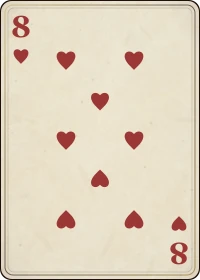
A run of 5, 6 and 7 of hearts is useful to you if you hold the 8 of hearts. What changes is when you can use it.
The run
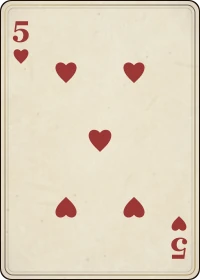
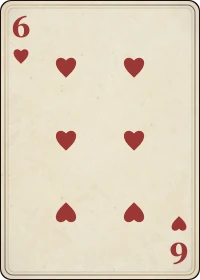
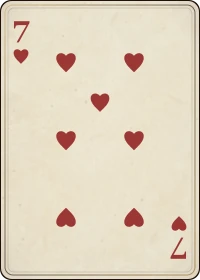
In your hand
- In Tonk
- After drawing, hit the exposed run with your 8. It leaves your hand, reducing your remaining total by 8 points.
- After a Gin knock
- If the opponent exposes this run after an ordinary knock, you may lay off your 8 before the final deadwood comparison.
- Against Gin
- No layoff is allowed. If the 8 is unmatched in your hand, it still counts as 8 deadwood points.
That is why an exposed spread is immediately useful in Tonk, while a possible layoff in Gin is something you may never get to use.
How a legal knock becomes a loss
Suppose your opponent knocks in Gin with 8 deadwood points. After arranging your own melds, your unmatched cards are the 8 of hearts and 6 of clubs: 14 points in total.
The opponent's exposed melds include the heart run shown above. You lay off the 8 of hearts and keep only the 6 of clubs. Now your deadwood is lower than the knocker's.
You undercut the knock. In OnlineCardGames.io's Gin Rummy game, that earns you the 25-point undercut bonus plus the 2-point difference: 25 + (8 − 6) = 27 points. Equal deadwood also undercuts an ordinary knock, although the difference would then be 0.
Our advice: do not judge a knock only by the number in your own hand. Think about which of your melds could let the opponent shed cards.
See the complete hands and calculation
Knocker: 5♥ 6♥ 7♥; J♣ Q♣ K♣; 4♦ 4♣ 4♠; unmatched 8♠.
Defender: 9♦ 10♦ J♦ Q♦; A♥ A♦ A♣ A♠; unmatched 8♥ 6♣.
Each hand contains 10 cards, with no shared card. We checked the melds and the 14-to-6 deadwood change using OnlineCardGames.io's Gin Rummy rules engine. The 25-point bonus is OnlineCardGames.io's setting; bonus values can vary elsewhere. This is a constructed worked example, not a recorded player result or win-rate study.
Is Tonk the same as Rummy?
Tonk is a rummy game, but it is not another name for Gin Rummy. Rummy describes a family built around sets of equal-ranked cards and runs of consecutive cards in one suit. It can also refer to a particular basic rummy ruleset.
If someone suggests "rummy," ask which version they mean. A 5-card Tonk hand, a 10-card Gin hand and other games in our rummy collection can share familiar combinations while using different drawing, melding and scoring rules. Tunk is simply an alternative spelling of Tonk.
Which should you play?
Start with Tonk if you want a smaller hand and visible opportunities on the table. You can watch spreads appear and look for cards that fit. Choose Gin if you enjoy keeping combinations hidden and deciding whether to knock or keep improving your hand. Neither choice makes the other game easier by default.
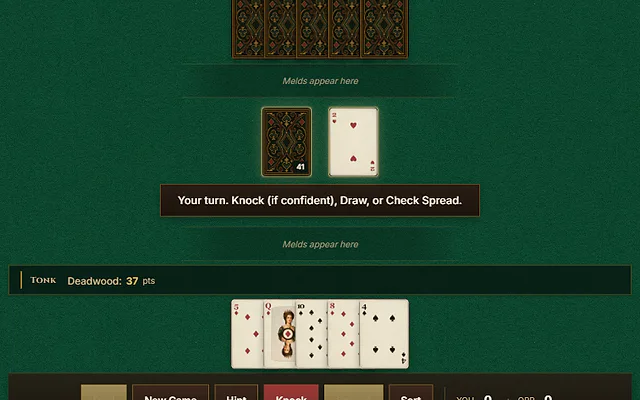
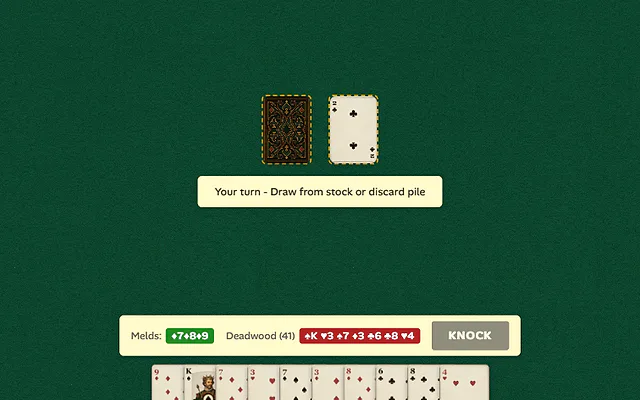
Rules and sources
This comparison follows the games available on OnlineCardGames.io. For background and other variants, see Wikipedia's articles on Tonk and Gin Rummy. The worked scoring example above was constructed and checked for this guide.